Clogged Window Weep Holes This Fall? How Leaf Debris and Standing Water Stress Seals in Metro Vancouver Homes
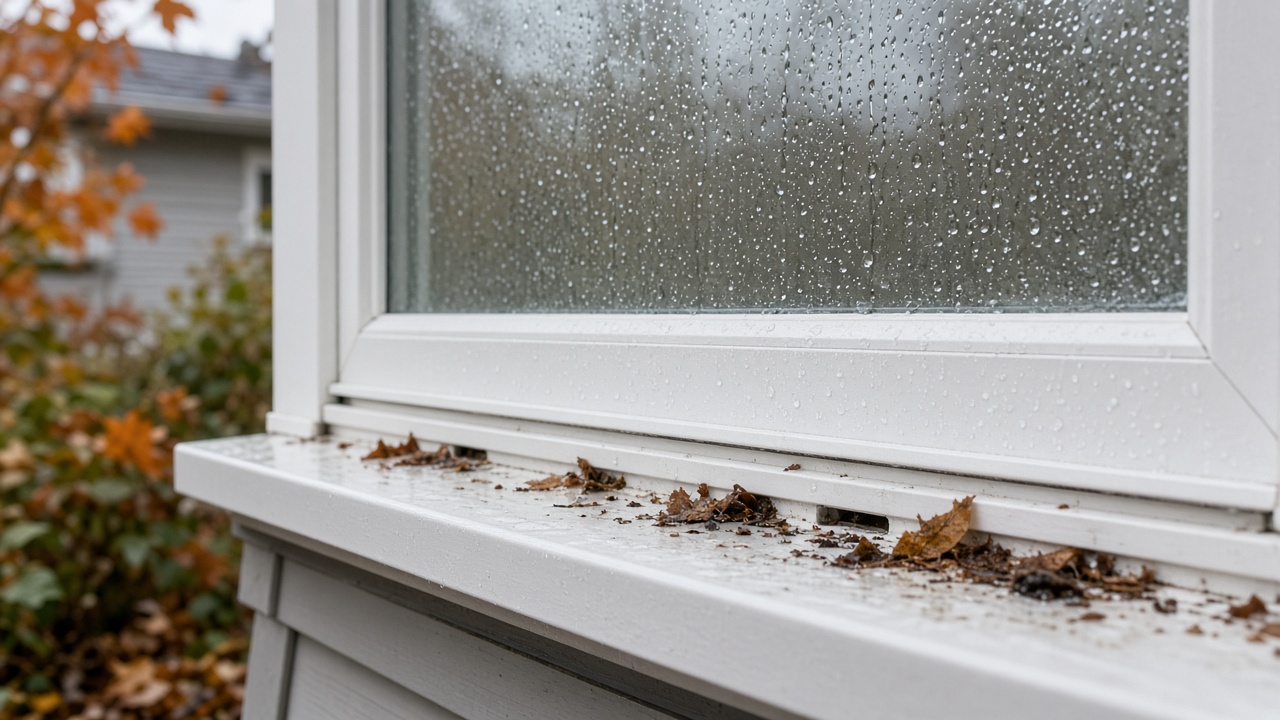
October in Metro Vancouver means wet leaves, wind, and days when rain never quite stops. On many homes, that debris drifts onto window sills and packs into the small drainage openings at the bottom of the frame. Those openings are weep holes. When they clog, water sits against the glazing edge longer than the window was designed to handle.
That standing water is not just a puddle on the sill. Over weeks of fall storms, it can stress the seals that keep insulating glass dry between the panes. If you are seeing damp sills, dark residue at the bottom of the frame, or glass that is starting to look milky inside the unit, this is the season to pay attention before winter rains settle in for months.
What weep holes do (and why fall clogs them)
Most modern vinyl and aluminum windows include small slots or holes near the bottom of the exterior sill or sash. Their job is simple: let rain that enters the frame drain back outside instead of pooling against the glass edge and the seal.
In summer, those paths usually stay clear. In fall across Vancouver, Burnaby, Surrey, Coquitlam, and the rest of the Lower Mainland, leaves, needles, seed pods, and grit wash onto every horizontal surface. A few wet storm cycles turn soft debris into a packed plug. Once weep holes stop draining, the sill holds water after every shower.
You do not need a ladder tour of every window. Start with ground-floor units under trees, patio doors facing a leaf-heavy yard, and any sill that still looks wet hours after the rain stops.
How standing water stresses seals and IGUs
An insulating glass unit (IGU) is two or more panes sealed at the edge, with desiccant and a spacer system meant to keep the cavity dry. The edge seal is tough, but it is not meant to sit in stagnant water for long stretches.
When weep holes clog:
- Water sits against the lower edge of the glass and frame
- Freeze-thaw nights and wind-driven rain push moisture into seams
- Soft seals and gasket edges stay wet longer than design assumes
- Over time, the seal can fail and moisture appears between the panes
That between-pane fog is different from room-side condensation on the glass surface. Room-side moisture often tracks with indoor humidity. Fog or haze sealed inside the unit points to a failed IGU. For the fuller foggy-glass explainer, see why windows get foggy. For how failed seals show up during our rainy season, see failed window seals and energy loss in the rainy season.
Clearing soft debris from weep holes will not reverse a seal that has already failed. It can reduce ongoing water stress on units that are still clear, and it helps you spot which windows need a glass pro before peak winter weather.
Symptom → cause → DIY vs pro
| Symptom | Likely cause | DIY vs pro |
|---|---|---|
| Water pools on the exterior sill after rain | Clogged weep holes or leaf pack on the sill | Clear soft debris gently; recheck after the next rain |
| Sill stays wet for hours; dark staining at the bottom rail | Drainage blocked; water lingering at the glazing edge | DIY clear first; if staining spreads or water reaches indoors, call a glass pro |
| Soft leaf mush in visible weep slots | Seasonal debris, not a glass failure yet | Homeowner clear with soft tools only |
| Fog, haze, or moisture between panes | Seal failure (IGU) | Pro: glass-only or full window path via assessment |
| Soft or warped gasket at the bottom edge; water stains on the interior sill | Prolonged water stress or frame issues | Pro inspection; do not force open sealed units |
| Draft, chill, or noisy rattle at the same wet window | Compromised seal or sash fit after water stress | Pro diagnosis; often pairs with fogged-glass check |
What you can safely clear yourself
VanCity Glass focuses on glass replacement, repair, and related residential work. Clearing soft fall debris from weep holes is homeowner maintenance education, not a named service we market. A careful DIY pass is still worth doing before winter.
- Look from outside after a rain. Note which sills hold water and which drain cleanly.
- Brush loose leaves and grit off the sill with a soft brush or cloth. Keep debris out of the weep openings.
- Clear soft plugs at visible weep slots with a plastic zip tie, soft nylon brush, or wooden toothpick. Work gently. Do not jab metal picks deep into the frame.
- Flush lightly with a small amount of clean water from a spray bottle or soft stream, then watch whether the sill drains. Avoid pressure washers aimed into the frame.
- Stop if you hit resistance, cracked vinyl, loose fasteners, or water appearing on the room side. That is a pro visit, not a harder DIY push.
Avoid drilling new holes, prying the sash apart, or injecting oils and solvents into the weep path. Those moves can damage weatherstripping, finish, or the seal you are trying to protect.
If the glass is already fogged between panes, cleaning the weep holes will not clear the haze. The sealed unit needs replacement. When the frame is still sound, many Metro Vancouver homes are good candidates for replacing the IGU while keeping the existing frame. That path, plus Low-E, double-pane, triple-pane, tempered, laminated, and privacy options, is covered on our window replacement page.
When standing water means glass replacement before winter
Plan a professional look when you see any of the following:
- Moisture, cloudiness, or mineral dots between the panes
- Persistent wetness on the interior sill or drywall staining below the window
- Soft, cracked, or shrinking gaskets at the bottom edge after a season of pooled water
- Multiple windows under heavy tree cover showing the same pattern
- A patio door or large picture window that fogs at the bottom first after fall storms
Waiting through winter often means more storm cycles against an already stressed seal. Fall is a practical window for assessment, custom fabrication, and install before the coldest, wettest stretch. Our process is straightforward: free in-home assessment, custom fabrication, professional install, and a final quality check. Broader home glass options, including patio doors and other residential work, sit on our residential glass hub.
Pricing depends on glass type, size, access, and whether the frame can stay. We do not list one-size numbers here. Photos of the sill, the weep area, and any fogged panes plus a short note in a quote request are enough to start.
Why Metro Vancouver fall is hard on sill drainage
Our climate stacks leaf drop, wind, and long rain events in the same weeks. Trees shed while gutters and downspouts are also clogging, so more water sheets across walls and sills. Coastal humidity keeps debris damp, so plugs form faster than in a dry inland fall.
Homes with mature cedars, maples, or street trees often see the worst packing on lower sills and west- or south-facing exposures that take wind-driven rain. Strata buildings and townhomes with shared planters can collect the same grit on every identical sill line. A quick building-wide check in October beats discovering a row of fogged units in January.
With over 15 years serving Vancouver, the Lower Mainland, and the Fraser Valley, we see the same seasonal pattern: clear drainage and dry sills early, or replace failed glass once seals give way. Licensed and insured crews handle the glass side when DIY clearing is no longer enough.
FAQ
Are weep holes supposed to be open all the time?
Yes. They are drainage paths, not defects. You may see a small flap or cover on some frames, but the path behind it should still let water out. Sealing them shut traps water against the glass edge.
Will clearing weep holes fix foggy glass?
No. Fog between panes means the IGU seal has already failed. Clearing debris helps protect units that are still clear and reduces ongoing water stress. Fogged glass needs replacement. Start with window replacement or a quote.
Can I use a shop vac or pressure washer on the sill?
A gentle brush and light rinse are safer. Hard suction tips and pressure washers can drive water deeper into the frame or damage finishes and weatherstripping. Soft tools only.
Glass-only or full window if the seal failed after water stress?
If the frame is square, sound, and not rotting or heavily warped, glass-only IGU replacement is often appropriate. If the frame is damaged from long-term water intrusion, a fuller window replacement may be the better path. An on-site assessment sorts that out without guesswork.
Ready to check sills before winter sets in?
If fall leaves are packing your sills, clear soft debris gently, then watch how the next rain drains. If the glass is already fogged between panes, or water is showing up indoors, it is time for a glass assessment rather than another DIY pass.
Get A Quote · See window replacement · Call or text 778-239-6052 · Email info@vancityglassltd.com
VanCity Glass Team