Wet Season Bathroom Prep: When Shower Door Seals and Hardware Need Attention Before Winter in Metro Vancouver
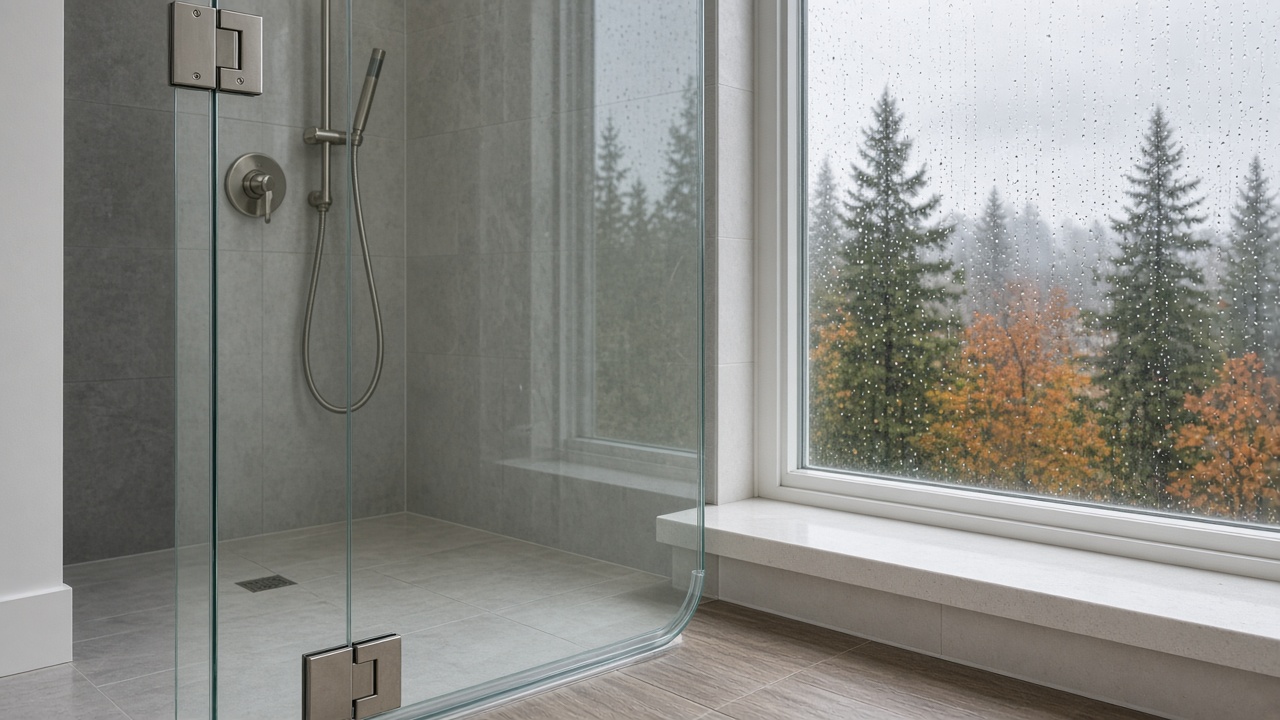
By mid-October in Metro Vancouver, bathrooms start working harder. Showers run longer as the weather cools, windows stay closed, and the air stays humid for hours after you step out. That is when tired shower door seals and hardware stop being a minor annoyance and start leaving water on the floor, sticky doors, and foggy silicone joints that never quite dry.
If your enclosure still looks fine from across the room but feels off when you use it, fall is the right time to check it — before peak wet months and holiday guests put even more demand on the bathroom.
What shower seals and hardware actually do
A shower enclosure is more than glass. The small parts around the door keep water inside and the door swinging or sliding smoothly.
Bottom sweeps and door seals close the gap between glass and curb (or door and fixed panel). Side seals along vertical edges do much of the sealing work on frameless and semi-frameless doors.
Hinges and pivots carry tempered glass and set how tightly the door closes. Rollers and tracks on sliding setups keep the door aligned so it does not scrape or leave a bottom gap. Handles and bars take daily use — finish and fasteners matter when humidity stays high for months.
Finishes such as polished chrome, brushed nickel, oil-rubbed bronze, matte black, and brass age differently in a steamy bathroom. Solid brass or stainless steel holds up better; thinner finishes often wear first at the edges and screw heads.
Wet-season failure signs worth a closer look
Check after a normal shower, while the glass is still damp — that is when leaks and sticky spots show up clearly.
- Water on the bathroom floor outside the curb or along the door edge
- Door that sticks, drags, or will not close fully against the seal
- Door that has dropped or gone out of plumb (gap wider at the top or bottom)
- Cloudy, cracking, or peeling silicone along glass-to-tile joints
- Hard-water film packed into the sweep so the seal no longer flexes
- Rust, pitting, or finish wear on hinges, rollers, handles, or fasteners
One or two mild signs often mean cleaning and a seal refresh. Several together — especially a dropped door plus floor water — usually means a pro should check alignment and hardware.
Symptom → cause → DIY vs pro
| Symptom | Likely cause | DIY vs pro |
|---|---|---|
| Thin film of water at the curb after showers | Worn or packed bottom sweep; slight door gap | Clean the sweep; if cracked or flattened, schedule a pro seal/hardware check |
| Door sticks or scrapes | Mineral buildup on hinges/rollers; door out of plumb | Clean tracks and pivots carefully; if it still binds, call a glass tech — do not force tempered glass |
| Rust streaks or peeling finish on hinges/handles | Hardware not suited to constant humidity, or finish worn through | Wipe dry after showers; replacement hardware usually needs a pro |
| Cloudy, lifting silicone at glass edges | Old sealant failing under wet-season humidity | Soft wipe only; resealing against glass and tile is a pro job |
| Door hangs uneven / large gap at top or bottom | Hinge or roller wear; settling; prior bump | Pro adjustment or hardware replace — glass weight and tempered edges are not DIY territory |
What you can safely clean and check yourself
A careful homeowner pass helps before winter humidity peaks:
- Rinse and dry the door after showers for a week and notice where water still escapes.
- Clean sweeps and side seals with a soft cloth and a non-abrasive cleaner. Lift soft debris out of the sweep channel so the seal can flex again.
- Wipe hinges, rollers, and handles dry, then check for loose screws (snug gently — do not overtighten into glass clamps).
- Look at silicone joints for gaps or mold lines you can see without scraping.
- Test the door slowly. It should open and close without grinding. If you feel sudden resistance, stop and leave adjustment to a technician.
Avoid metal scrapers, harsh abrasive pads, and oil sprays that attract grit into rollers. Never lean on a frameless door or hang a heavy towel from a hinge not designed as a bar — tempered panels are unforgiving when twisted.
Repair seals and hardware vs replace the enclosure
Not every leaky door needs a full new shower.
Repair or refresh seals and hardware when:
- The glass is still clear, free of edge chips, and the layout still works for you
- Hinges, rollers, or sweeps are the worn parts, and matching hardware is available
- You mainly need the enclosure watertight and smooth again before the wet months
Plan a fuller enclosure update when:
- Glass is etched, heavily scratched, or chipped in ways that keep collecting soap film
- Hardware is obsolete and nothing matches the existing holes or edge profile cleanly
- You want a different configuration (for example framed slider to frameless pivot or neo-angle)
- You are already renovating and want glass, finishes, and layout to match new tile and vanity
VanCity Glass builds frameless and semi-frameless enclosures in clear, low-iron, frosted, textured, and rain glass, with custom tinting options and hardware finishes suited to wet rooms — sliding, pivot, inline, neo-angle, and steam configurations. If the glass is still sound, a targeted hardware and seal service is often the smart interim step. For a full new look, start with our shower glass page, then the frameless shower glass enclosures guide or the shower glass installation complete guide for deeper planning detail.
Pricing depends on the glass type, hardware, configuration, and site conditions. The clearest next step is a quote with photos of the enclosure and a short note about what is leaking or sticking.
Why fall timing matters in Metro Vancouver
Wet season here is long. From late fall through early spring, bathrooms stay damp longer because outdoor air is cool and moist and fans run less consistently. Seals that were “almost fine” in August often fail visibly in November.
Fall also sits ahead of holiday hosting. Guests notice floor puddles and sticky doors. Fixing seals and hardware now means the bathroom is reliable when traffic is highest, and it gives you time to decide whether a full enclosure refresh belongs in a winter or spring reno plan.
If you are refreshing the whole wet room, a vanity mirror upgrade often pairs well with shower work — see custom mirrors for that adjacency. Broader home glass options live on our residential glass hub.
How a glass pro approaches the visit
With over 15 years serving Metro Vancouver, the Lower Mainland, and the Fraser Valley, our shower work follows the same care path as a new enclosure: diagnose on site, recommend repair versus replace honestly, and leave clear care instructions.
- In-home look at glass, seals, hinges or rollers, curb, and silicone
- Recommendation — seal refresh, hardware replacement, realignment, or a new enclosure if needed
- Custom parts or fabrication when matched hardware or new panels are required
- Install or service, then a final check that the door closes cleanly and water stays inside
Tempered shower glass on new work is specified to meet BC building codes and CSA standards. Matching that care on a repair means hardware and seals suited to constant moisture — not a temporary stopgap.
FAQ
Can I just replace the bottom sweep myself?
If the sweep is a simple slide-on piece and the door still hangs true, some homeowners swap it successfully. If the door is out of plumb, the glass edge is chipped, or water escapes at more than one point, a quick sweep change will not fix the root cause — get the alignment checked first.
Why did my shower start leaking only this fall?
Humidity and more frequent hot showers swell old silicone, soften tired vinyl, and highlight gaps that stayed dry enough in summer. Cooler rooms also mean condensation stays on glass and metal longer, which speeds finish wear on hinges and handles.
Is a sticky door dangerous?
Forced tempered glass is the risk. If the door binds, do not yank it. Sticking usually means rollers, pivots, or mineral buildup — all fixable — but forcing a misaligned door can chip an edge or stress a hinge clamp.
Repair or replace — how do I decide quickly?
If the glass is sound and you like the layout, start with seals and hardware. If the glass is heavily worn, the style no longer fits, or matching parts are unavailable, plan a new enclosure. Photos and a short description in a quote request are enough for us to point you in the right direction.
Ready to button up the shower before winter?
If your door is leaking, sticking, or showing tired seals and hardware, a fall check saves mess and stress through the wet months. Tell us what you are seeing, send a couple of clear photos of the door edges and hinges, and we will help you choose a seal and hardware refresh or a new enclosure that fits how you use the bathroom.
Get A Quote · See shower glass · Call or text 778-239-6052 · Email info@vancityglassltd.com
VanCity Glass Team