Window Cracked By Itself? How Cold Mornings and Thermal Stress Crack Glass in Metro Vancouver Homes
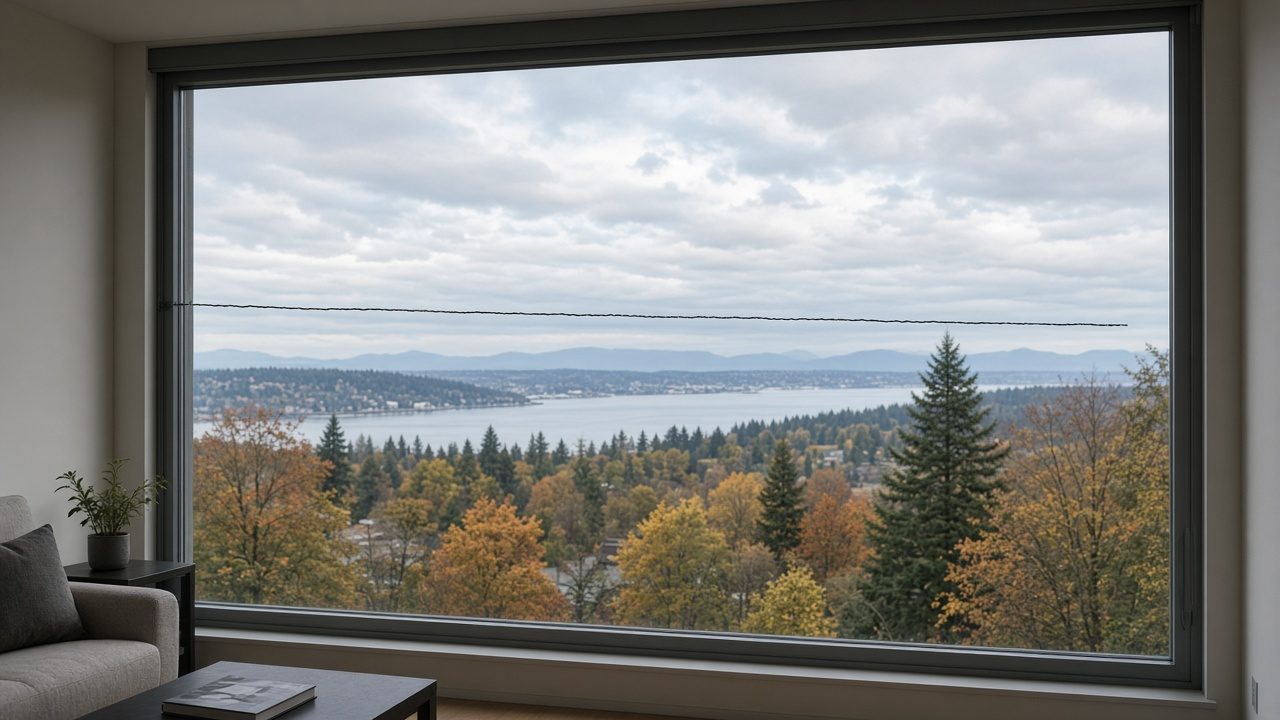
You open the curtains on a cold fall morning and there it is: a long crack running across the living-room window. Nobody threw anything. No branch came down. The kids swear they didn't touch it. So what happened?
In a lot of Metro Vancouver homes, the answer is thermal stress. When one part of a pane of glass is much warmer than another, the glass expands unevenly, and ordinary window glass can crack from the strain. Cold, clear fall and early-winter mornings are exactly when that difference gets big.
Here's how to tell a thermal stress crack from other damage, whether it's urgent, and what replacing it actually involves.
What thermal stress actually is
Glass grows slightly when it warms up and shrinks when it cools. That's normal, and a window handles it fine when the whole pane changes temperature together.
The trouble starts when the centre of the glass heats up while the edges stay cold. The edges of a pane sit inside the frame, so they're shaded and insulated from the sun and the room. The centre is exposed. On a cold morning:
- Low fall sun hits the middle of the glass and warms it quickly.
- The edges, tucked into a cold frame, barely change.
- The warm centre tries to expand; the cold edge holds it back.
If that pull is strong enough, the glass cracks, and it almost always starts at the edge, where the glass is under the most tension.
Ordinary (annealed) window glass is the most vulnerable. Many older windows and lots of fixed picture windows use it. Tempered glass handles temperature differences much better, which is one reason it's used where safety rules require it.
How to tell a thermal crack from impact damage
You can often read the cause right off the glass:
| What you see | Likely cause |
|---|---|
| A single crack that starts at the edge of the glass, at or near a right angle to the frame, then wanders or curves across the pane | Thermal stress |
| A small chip or pit with cracks spreading out from it like a star or bullseye | Impact (a stone, ball, bird, or debris) |
| The whole pane turned into small pebble-like pieces | Tempered glass breakage, often from impact or edge damage |
| A crack near a corner of a window that also sticks, or where the wall or frame looks out of square | Possible frame or building movement putting pressure on the glass |
| Fog or moisture between the panes appearing after a crack | The crack has broken the sealed unit, and moist air is getting in |
If your glass has shattered into pebbles, that's a different situation. Our guide to tempered glass cracks after fall storms explains what to do there.
Why it happens more in fall and early winter
Metro Vancouver doesn't get the deep freezes the Prairies do, but our fall and winter set up plenty of temperature contrast:
- Clear, cold mornings after rain. The glass and frame are chilled overnight, then low-angle sun hits the pane directly.
- Heaters and vents. A space heater, baseboard heater, or floor register blowing warm air straight onto cold glass heats one area fast.
- Curtains and blinds pulled tight to the glass. Heavy drapes or cellular blinds closed right against the window trap heat between the fabric and the pane, especially once the sun comes around.
- Partial shade. An eave, a balcony above, a tree, or a neighbouring building can leave part of the window cold while sunlight warms the rest.
- Dark film, decals, or paint on the glass. Dark areas absorb more heat than the clear glass around them.
- Edge chips. A small nick on the edge of the glass, sometimes from installation or a past knock, gives a crack an easy place to start.
Large windows are especially prone, which is why homes with big view windows on the North Shore, in hillside neighbourhoods, and in high-rise condos see this more often.
Is a cracked window an emergency?
Usually not, but it depends on what's left holding the opening together.
Treat it as urgent and call 24/7 emergency glass if:
- Glass has fallen out or pieces are loose and could drop.
- There's an opening that lets rain in or lets someone get into the house.
- The crack is in a door, a low window, or a balcony panel where someone could push on it or fall against it.
- The crack keeps growing noticeably over hours.
Book a regular assessment if:
- It's a single crack in one pane of a double-pane window, and the glass is still firmly in place.
- The window is fixed (doesn't open) and out of the way of foot traffic.
- There's no fog or water inside the unit yet.
A cracked window still keeps rain out for now, but it doesn't keep doing that forever. Broken or cracked glass weakens your home's security, energy efficiency, and weather protection, and in our wet climate a cracked outer pane can let moisture into the sealed unit. That's when you start to see fog between the panes. It's worth getting it measured before winter rather than waiting for spring.
What to do in the meantime
While you wait for replacement:
- Turn heaters and vents away from the cracked window, and keep space heaters well back from all glass.
- Leave a gap between curtains or blinds and the glass, or open them fully during the day so heat doesn't build up behind them.
- Don't press on the crack, try to seal it, or open and close the window more than you need to. Vibration and pressure can make it run.
- Keep kids and pets away if the crack is in a low pane or a door.
- Take photos of the full window and a close-up of where the crack meets the frame. That's useful for your quote and, if you're making a claim, your insurer.
Cracked glass can't be repaired back to full strength. The fix is replacing the cracked pane or sealed unit.
What replacement usually looks like
In most homes, a thermal crack doesn't mean a whole new window. If the frame is sound, the usual fix is glass-only replacement: we measure the existing sealed unit (or single pane), have a new one made to size, and install it in the existing frame.
A few things affect the plan:
- Which pane cracked. In a double-pane window, the crack may be in the inside or outside pane. Either way, the sealed unit is typically replaced as a whole.
- The frame's condition. If the frame is rotted, warped, or out of square, or if building movement is pressing on the glass, new glass in the same frame may crack again. Our guide on fogged window glass: glass-only vs full window covers the frame checks that decide this.
- Where the window is. Glass in doors, near floors, or in bathrooms may need tempered safety glass. We'll confirm what's required for that opening.
- Whether to upgrade. If you're replacing the unit anyway, it's a good moment to ask about low-E glass. See when a low-E upgrade makes sense.
Our window replacement service handles cracked, broken, and fogged glass in homes across Metro Vancouver and the Fraser Valley.
Condos and townhouses
If you live in a strata building, check with your property manager before booking. Depending on your bylaws, window glass may be the strata's responsibility, the owner's, or split between them. Property managers can reach us through our strata glass page for unit and common-area glass, including windows that need special access.
If the crack is a safety issue right now, make the area safe and call first. Paperwork can follow.
How to lower the risk of it happening again
You can't control the weather, but you can take some of the stress off your glass:
- Keep heat sources off the glass. Point floor vents and space heaters into the room, not at windows.
- Give window coverings breathing room. A few centimetres of space between blinds or drapes and the glass lets heat escape.
- Ask before applying film. Some dark or reflective films raise the heat load on the glass. Check that a film is suitable for your glass type first.
- Skip the hot water. Never pour hot water on cold or frosty glass to clear it.
- Look at the edges when you clean. A chip on the edge of a pane is worth mentioning at your next service visit.
- Watch frames that stick or shift. A window that suddenly binds may be under pressure from the building, which puts strain on the glass as well.
Got a crack that appeared out of nowhere?
A crack that starts at the frame edge and wanders across the pane, with no impact point, is the classic sign of thermal stress. It's common on cold, sunny fall mornings, especially on big windows and glass with heat aimed at it. It usually isn't an emergency, but it won't fix itself, and a cracked sealed unit can start letting moisture in through the wet season.
Get A Quote to have your cracked window measured for glass-only replacement.
Window replacement covers cracked, broken, and fogged window glass in Metro Vancouver homes.
24/7 Emergency Glass if glass is loose, falling out, or leaving your home open to rain or entry.
Residential glass covers windows, patio doors, showers, and railings across the Fraser Valley.
Call or text 778-239-6052, or email info@vancityglassltd.com. The VanCity Glass Team helps Metro Vancouver and Fraser Valley homeowners and strata buildings replace cracked window glass before winter sets in.